 Spann Fitness
Landmine Training · Programming · Home Gym · 6 min read · Updated November 2026
What Goes in a Full-Body Landmine Workout?
A full-body landmine workout is five movements run off one sleeve: a hinge, a squat, a press, a row, and something rotational to finish. The store's own movement list covers squats, single and double-arm presses, rotational throws, rows, deadlifts, anti-rotation holds, lunges and split-stance work, and the exercise library breaks all nine down one at a time. What makes it a session rather than a list is that nothing gets unbolted between movements. One bar stays in one sleeve for the whole hour. The only two things that change are the plates on the loadable end and where you stand relative to the pivot.
The session, in order
Deadlift, squat, press, row, rotational press. That is the order we run it in, and those five movements are a full-body landmine session that goes start to finish without you touching the attachment.
Start with the deadlift because it is the one you can load heaviest and the one that wants you fresh. Face the sleeve, loaded end on the floor between your feet, hinge, stand. Then the squat, holding that same loaded end at your chest in both hands. The plates have not moved and neither has the bar. You have turned around and changed your grip.
The press comes third, one hand or two, from the shoulder and up along the arc the sleeve sets. Then the row: stand beside the loaded end, hinge over, pull it to the hip. Finish with the rotational press, standing side-on, turning the hips first and letting the arm come off that turn. If you want a sixth, the anti-rotation hold is the quiet one. You stand side-on holding the loaded end out in front of you and refuse to let the bar turn you.
Between all five, the work is lifting plates on and off a 7.5 inch sleeve and walking around the pivot. That is the whole setup change. The order we put plates on and take them off is in loading plates on a landmine.
Why that order
Heaviest first, most technical last. The deadlift and the squat take the most load, so they go while you are freshest and while your grip is still honest. The press and the row are single-arm friendly, which means they take longer, so they sit in the middle where the clock matters less.
Rotation goes last for a different reason. The sequence in a rotational press is feet, hips, ribs, arm, and it falls apart quickly when you are tired and start leading with the arm. We would rather that movement be done at the end with the plates stripped back than done heavy and sloppy in the middle.
Pairing is where you save time. The press and the row go together and nothing has to change between them except which side of the loaded end you are standing on. Same for the squat and the anti-rotation hold.
The bar is the floor on every movement
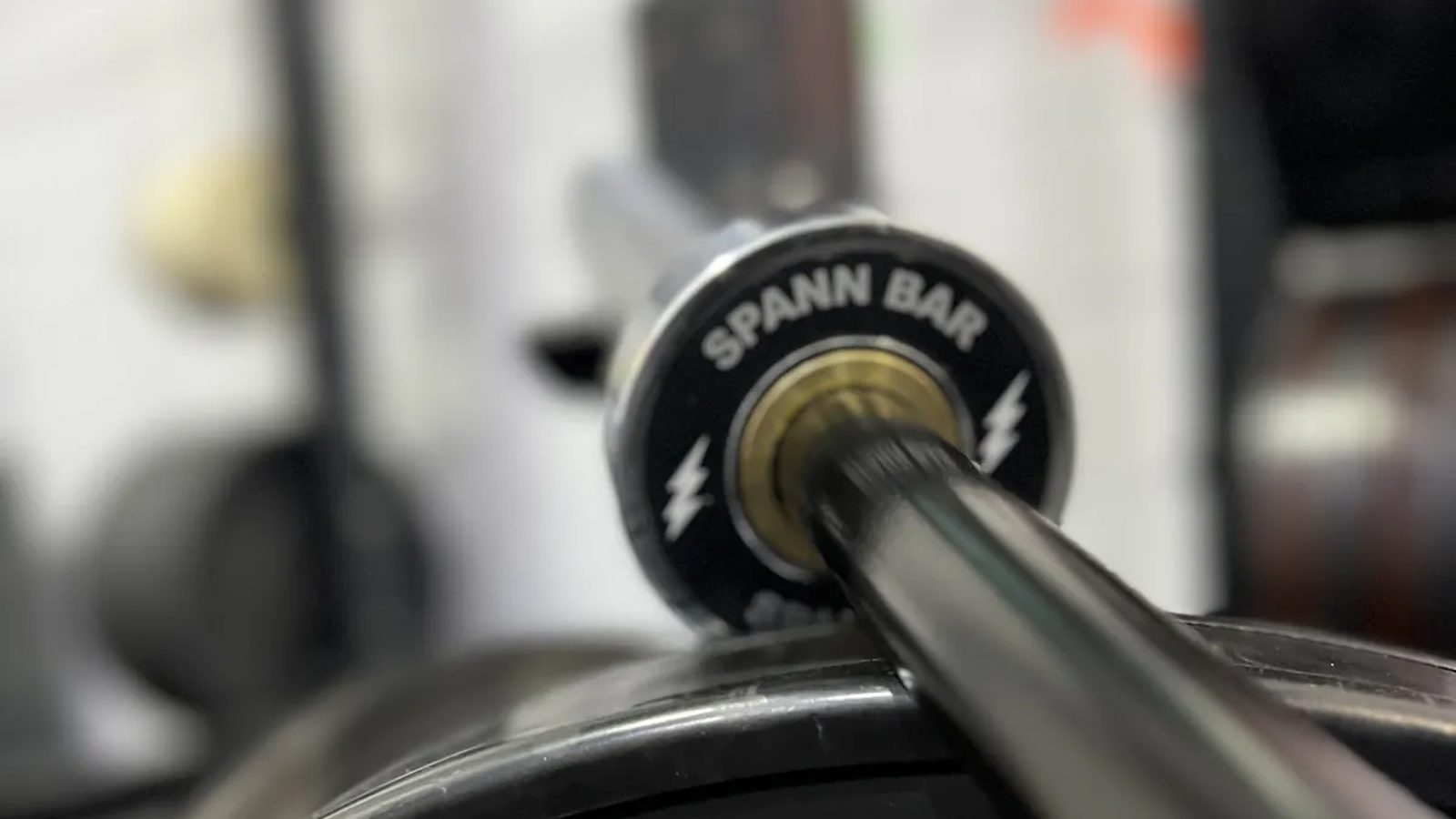
This is the part that catches people coming from a rack. On a landmine, one end is anchored, so you are only holding up part of the bar, but the bar's own weight is still the lightest you can go on any of these five. Our bars run 15.5 lb on the Fresh, 25 lb on the Melo, 34 lb on the Velencia, 37 lb on the Hybrid and 43 lb on the Spann Bar, and that is the starting number on the press and the rotational work before a single plate goes on.
Which matters most on the movements where a press is the limiting factor. A 43 lb bar is a real single-arm press for a lot of people with nothing added, and a 15.5 lb bar leaves room to add. Every bar in the lineup takes standard Olympic plates on the same 7.5 inch loadable end and is rated to 550 lb, so the ceiling is not the question. The floor is. What size landmine bar you need goes through the five in detail.
Practically: load the deadlift and the squat together, then strip to the bar or close to it for the pressing and rotational work. That is two plate changes in a session, which is why this runs fast.
What you actually need for it
One bar, one standard 2-inch landmine sleeve and some plates, which is the whole kit list we would give anybody asking. The sleeve can be a floor plate, a corner unit or one bolted to a rack upright; every movement here starts the same way, with one end seated in that sleeve, plates on the loadable end and your hand on the knurled grip right behind them.
Space is the thing worth checking before you plan a session around it, because the far end of the bar travels an arc and you are standing at the far end. The rotational work is the widest of the five by some distance. Our videos page shows the movements running if you want to see the path before you set up.
A rough scheme to start: three sets of five on the deadlift and the squat, three sets of eight each side on the press and the row, two sets of six each side on the rotational press. Adjust it to what you can control on the last rep. We are describing a session shape here, not promising anything about what it does for you.
Common questions
- Can one landmine bar really cover a full-body session?
- For these five movements, yes, because they all use the same setup. One end stays in the sleeve and the plates stay on the loadable end. What changes between a deadlift and a rotational press is where you stand relative to the pivot and how much is loaded, not the hardware.
- How many movements should a full-body landmine workout have?
- Five covers a hinge, a squat, a press, a pull and rotation, which is the spread most people are after. Six if you add the anti-rotation hold. More than that and the plate changes start taking longer than the sets.
- Do you need to change the attachment between movements?
- No. Every movement in the exercise library starts with one end of the bar seated in a standard 2-inch landmine sleeve and plates on the 7.5 inch loadable end. The attachment stays where it is for the whole session.
Your bar.
Five sizes from 15.5 lb. Fits a standard 2-inch landmine sleeve. 550 lb capacity. 1-year limited warranty, 30-day returns.
Order your barThe first and only patent-approved barbell designed for landmine sleeve attachment.