 Spann Fitness
Landmine training · Pressing · Programming · 6 min read · Updated October 2026
Landmine Press vs Overhead Press: Which Should You Program?
The overhead press drives a barbell straight up from the shoulders to lockout over your head. The landmine press drives the free end of a bar up and away, along an arc the sleeve fixes, so it finishes high and in front of you rather than directly overhead. Neither one replaces the other. Program the overhead press as your main vertical press when you can get the bar overhead with your ribs down and your back neutral. Use the landmine press as your main press when you can't own that position yet, and as accessory work when you can.
This question comes up on our gym floor constantly, usually from someone who has been told the landmine press is a replacement for the overhead press and someone else who has told them it isn't. Both people are half right. The bar path is the whole story.
The bar path is the difference
On an overhead press the bar is free. It goes where you push it, and you have to keep it stacked over the middle of your foot while it travels past your face to lockout. That demands a lot from the shoulders, the upper back and the trunk at the same time, and it is the reason the lift is such a good test of pressing strength.
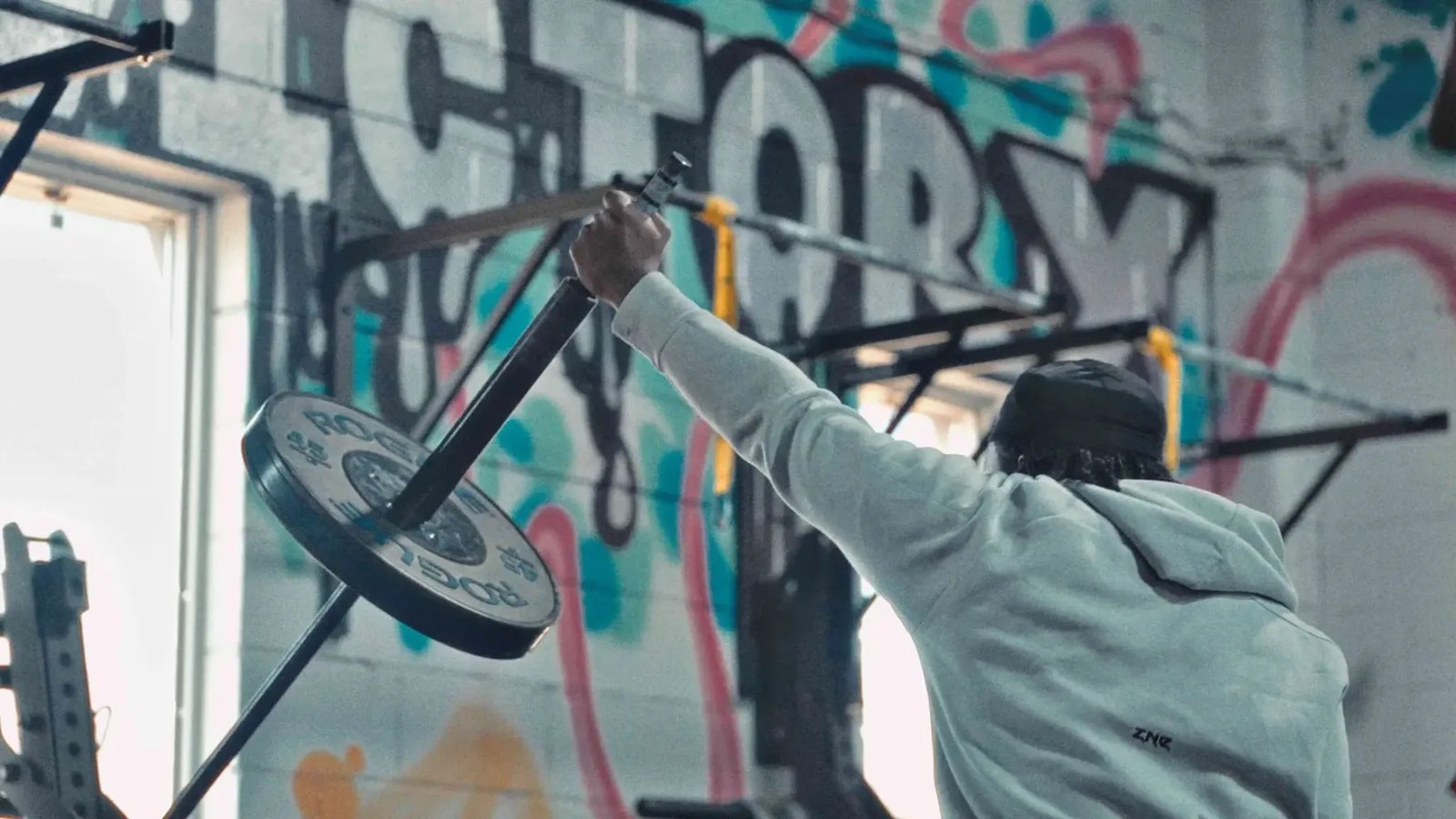
On a landmine press one end of the bar sits in the sleeve, so the path is fixed. In our own exercise notes we put it simply: the sleeve fixes the path, so the bar rises on an arc, not straight up. You press up and away, and the arm finishes long, with the bar high and in front of you.
That angle sits between an incline press and a strict overhead press. You still drive upward, you still have to hold your ribs down, but you never have to get the bar directly over your head.
When the overhead press should be the main lift
If you can press a bar overhead with your ribs down, your lower back neutral and the bar finishing over your midfoot, the overhead press is the better main vertical press. It loads heavier, it is easy to progress in small steps, and it is the standard measure for a reason.
In that case the landmine press earns its place as accessory work. One-arm, half-kneeling or split-stance versions add a lot of pressing volume without asking for another heavy overhead set, which is how we use it with most of our lifters.
When the landmine press should be the main lift
If you can't get into a clean overhead position yet, if your ribs flare and your back arches to find lockout, the landmine press lets you press hard along a path you can actually own. That is a position problem, not a strength problem, and training through it on a free bar just rehearses the arch.
The landmine press also suits athletes who need to press from a split stance or off one leg, because the fixed path lets you stay balanced while you load the press. The single-arm landmine press adds a rotation problem on top: the job for the rest of your body is not to turn, and the hips stay square to the sleeve the whole set.
Programming both in one week
A simple split works for most lifters, and it's the one we use most. Put the overhead press first on one upper-body day, heavy, in sets of 3 to 5. Put the landmine press on a second upper-body day, one arm at a time, in sets of 8 to 12, after your main lift.
If you're building toward the overhead press, flip it: landmine press as the main lift, with light overhead work for position only, until the overhead position is clean.
Either way, don't load the landmine press like a strict press. The arc changes how the load sits in your hand, so the numbers won't compare one to one, and chasing a big landmine number usually turns it into a lean-back push press.
The bar makes a difference too
Most landmine work gets done with an Olympic bar wedged into a sleeve. It does the job, but the grip end of a bar like that was never shaped for one-handed pressing, and that's what we built ours around. Our bars run from the 15.5 lb Fresh Bar at 77 inches to the 43 lb Spann Bar at 94.1 inches, so the arc and the starting load can match the lifter. We go deeper on the hardware in what a landmine barbell is, and the full lineup is on the Spann Bar page.
Your bar.
Five sizes from 15.5 lb. Fits a standard 2-inch landmine sleeve. 550 lb capacity. 1-year limited warranty, 30-day returns.
Order your barThe first and only patent-approved barbell designed for landmine sleeve attachment.