 Spann Fitness
Landmine training · Pulling · Technique · 6 min read · Updated October 2026
How To Row With a Landmine
Stand beside the loaded end of the bar, hinge at the hips with a flat back, and take the grip with the near hand. Pull the end of the bar to your hip with the elbow tracking close to your body, then lower it until the arm is long again. That is the whole movement. Everything else is where you stand and how you stop your torso turning, and we cover both below. The movement notes live on our landmine row page too.
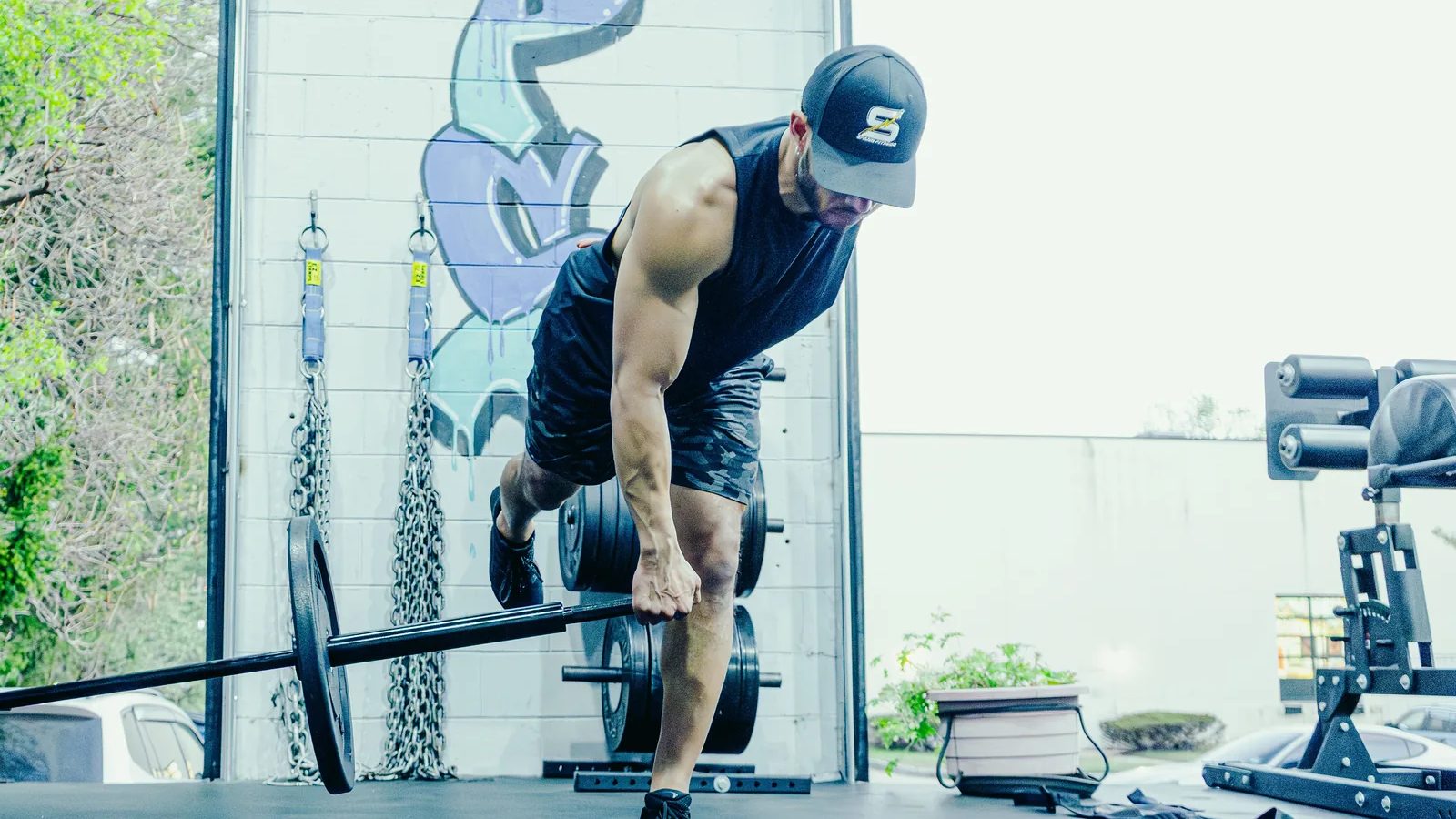
We get asked this on the floor more than any other pull, usually by someone who has set the bar up and found it either swinging away from them or dragging across their shin. Both are setup problems, not strength problems.
If you are working through the rest of the landmine movements, how to squat with a landmine is the one lifters ask about next.
Where to stand decides the rest
Set the bar in the sleeve and load the far end. Then stand beside the loaded end, not behind it. Your feet end up roughly square to the bar, close enough that when you hinge, the grip is already under your shoulder rather than out in front of it.
If you stand too far back, the pull turns into a drag along the floor and your lower back takes the load. Too far forward and the plates hit your shin on every rep. Walk in or out a few inches until the arm hangs straight down from the shoulder at the bottom. That is the spot.
The arc is doing something a dumbbell does not
One end of the bar is pinned in the sleeve, so the free end travels on an arc rather than straight up and down. In practice the load pulls slightly away from you at the bottom and slightly toward you at the top, which means the row has a horizontal job as well as a vertical one.
On our own bars the grip sits right behind the plates, so the load stays close to your hand and the bar does not swing. That is the detail that keeps the arc honest: when the weight sits far from the grip, the end of the bar wanders and you spend the set fighting it instead of pulling.
Keep your shoulders level through all of it. A row is not a twist. If the near shoulder climbs toward the ceiling at the top of the pull, the weight is winning.
The setup, step by step
Six to twelve reps a side is where we keep most lifters. If the last rep of a set turns into a shrug or a twist, that was the real end of the set.
- Load the far end
Bar in the sleeve, plates on the free end. Start lighter than you think: the arc changes how the load feels in the hand and the numbers do not carry over from a dumbbell row.
- Stand beside the loaded end
Feet square to the bar, close enough that the grip hangs under your shoulder once you hinge.
- Hinge, do not squat
Push the hips back with a flat back until your torso is somewhere near parallel. Soft knees. The hinge sets the angle you will pull along.
- Take the near-hand grip
Free hand on your thigh or on a rack upright. The arm holding the bar is long, shoulder packed, not hanging loose.
- Pull to the hip
Elbow close to the ribs, drive it back toward your hip rather than out to the side. Finish with the bar end at the hip, shoulders still level.
- Lower under control
Let the arm go long again and let the shoulder blade travel with it. Reset the brace, then go again.
One hand or two
Single arm is the default and it is what the photo above shows. One side at a time means the trunk has to stop you rotating toward the bar, and the job for the rest of your body is simply not to turn.
Both hands on the end, often with a V-handle, is the other option. It lets you load heavier and it takes the anti-rotation work out, which makes it a different exercise rather than a harder version of the same one. Pick the one that matches what the rest of the session is doing.
When the plates start crowding the floor
The practical ceiling on a landmine row is usually space, not strength. Stack enough plates on the end and they sit close to the floor, which cuts the range of motion and puts the bar into your shin on the way down.
Two things help. Raise the loaded end onto a mat or a low box so the arc starts higher. Or use a longer bar, because length moves the free end further from the pivot and changes both the arc and how the load sits at the bottom. Our lineup spans a 77 inch Fresh Bar at 15.5 lb up through the Spann Bar, which measures 94.1 inches and weighs 43 lb, and every one of them takes a 7.5 inch loadable sleeve, so what fits on the end is a published number rather than a guess.
If you are still working out which end of that range fits you, what size landmine bar you need walks through it, and the full lineup sits on the Spann Bar page.
Common questions
- Do I need a landmine attachment to row like this?
- You need the bar end held at a fixed point. A landmine attachment, sleeve-mounted, rack-mounted or corner, plus standard Olympic plates is all the setup takes. A corner works, though it moves more than an attachment does and it is harder on the wall.
- Single-arm landmine row or both hands?
- Single arm is the default. Rowing one side at a time asks the trunk to stop your torso rotating toward the bar, and it keeps the shoulders level. Both hands on the end lets you load heavier but removes that anti-rotation job, so treat it as a separate exercise rather than a progression.
- Why does the bar swing away from me?
- Usually a standing position too far back, so the pull drags along the floor instead of travelling up the arc. Step in until the grip hangs under your shoulder when you hinge. A grip sitting far from the plates makes it worse, because the free end has more room to wander.
- How heavy should a landmine row be?
- Lighter than the dumbbell row you are used to, at least to start. The fixed end changes the direction of the load through the pull, so the weight feels different in the hand even at the same number on the plates. Six to twelve reps a side, stopping when the shoulders stop staying level, is a sensible working range.
Your bar.
Five sizes from 15.5 lb. Fits a standard 2-inch landmine sleeve. 550 lb capacity. 1-year limited warranty, 30-day returns.
Order your barThe first and only patent-approved barbell designed for landmine sleeve attachment.