 Spann Fitness
Landmine training · Hardware · Getting started · 7 min read · Updated October 2026
What Is a Landmine Barbell, and What Is It For?
A landmine barbell is a bar made to sit in a landmine sleeve, which is a hinged steel socket anchored to the floor or a rack that holds one end of the bar and lets the other end travel in an arc. You load the free end, you hold the free end, and the pivot does the rest. That is the whole mechanism. An Olympic bar can be jammed into a landmine sleeve and plenty of people do it, but the bar was engineered for two hands on a straight line and a plate on each end, which is why the free-end work always feels like a workaround.
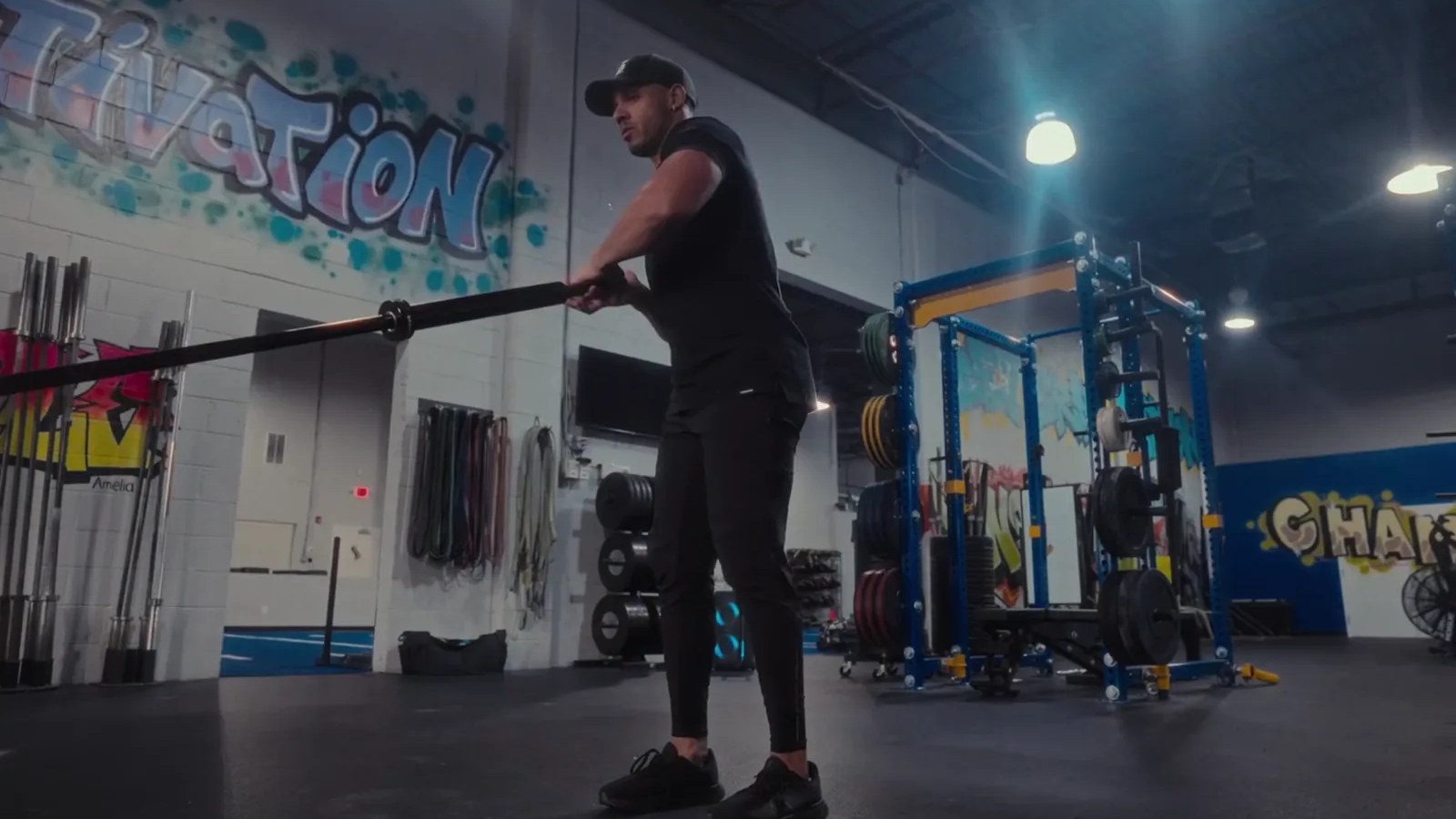
We build for the sleeve rather than around it. The Spann Bar is the first and only patent-approved barbell designed for landmine sleeve attachment. U.S. Patent No. D 1,105,306.
What the pivot actually changes
The arc is the point. A straight bar moves in whatever plane you can hold it in, and a landmine bar moves on a fixed radius around an anchored end, so the path is decided before you start.
That does three things. It turns a bilateral movement into a single-arm one without needing a dumbbell. It puts the load on an angle, so a press travels up and forward rather than straight overhead, and a row pulls back and slightly up. And it makes rotation a loadable pattern, because the bar can travel across your body on the same arc it presses on.
The practical consequence is that the resistance curve changes through the range. Near the anchor the bar is heavy in your hands; out at full extension the geometry has taken some of it. That is the geometry doing it, and it is why a landmine press at a given plate weight does not feel like an overhead press at the same plate weight.
What it needs to anchor into
A standard 2-inch landmine sleeve. Ours fit those, which is the common fitting on racks and on floor-mounted units, so a bar is not married to one brand of hardware.
If your rack has a landmine attachment already, that is what it is. If you have nothing, a floor unit is the usual answer in a home gym because it does not need rack real estate and can be moved. The sleeve is the thing that has to be solid, since every rep is loading a hinge.
What makes a bar a landmine bar rather than a barbell in a sleeve
Three specifications, and they are worth checking on anything you buy.
One-end loading. The loadable sleeve is on the free end only. Ours is 7.5 inches, which is what decides how much plate you can actually stack before you run out of post.
Length chosen for the arc. The bar's length sets the radius, which sets the path of every rep. Ours run from 77.0 inches on the Fresh Bar to 94.1 inches on the Spann Bar and the Hybrid, which is a real range rather than one length with different stickers.
A grip built for one hand. Ours are 25 mm across the lineup, with 28.5 mm on the flagship Spann Bar.
Every size carries the same 550 lb capacity, the same heavy-duty steel with electrophoretic black paint, and the same 1-year limited warranty against manufacturing defects.
Which movements the landmine is genuinely good at
The press is the one most people meet first. The arc lets you press hard with one arm without the shoulder having to find a true overhead position, and the torso has to resist being turned while you do it.
Rowing is the other half of that pair. You stand to the side or over the bar, pull the free end, and the fixed end keeps the path honest in a way a dumbbell does not.
Then rotation. Anti-rotation holds and rotational presses are difficult to load properly with almost anything else in a gym, and the landmine makes them a normal part of a session instead of a novelty.
Squats, deadlifts and lunges all run on the same hardware, with the bar held at the chest or beside the hip. Every one of these is written up with setup and positions in our exercise library, and there is footage of them on the videos page.
Where it fits in a gym that already has a rack
Next to it, usually, and it earns the space for a specific reason.
A rack full of Olympic bars covers bilateral loading well. What it covers badly is loaded single-arm work and loaded rotation, and those are the two things the landmine does without a second thought. For a home gym the sleeve is small, the bar stores vertically against a wall, and one bar plus the plates you already own covers presses, rows, squats, deadlifts and rotational work.
For a facility running youth programmes alongside adults, the size range is what matters, because the same movement pattern can be loaded at 15.5 lb or 43 lb depending on who is holding it.
If you are working out which size is yours, what size landmine bar walks the lineup by who each one suits, and what fits a 2-inch landmine sleeve covers the hardware side. For the straight comparison against a bar you already own, landmine bar against Olympic bar is the one to read.
Common questions
- What is a landmine barbell?
- A bar made to sit in a landmine sleeve, which is a hinged steel socket anchored to the floor or a rack that holds one end of the bar while the other end travels in an arc. You load the free end and you hold the free end, and the pivot sets the path of every rep.
- Can I just use my Olympic bar in a landmine sleeve?
- You can, and plenty of people do. An Olympic bar is engineered for two hands on a straight line with a plate on each end, so single-arm work on the free end always feels like a workaround. The Spann Bar is the first and only patent-approved barbell designed for landmine sleeve attachment. U.S. Patent No. D 1,105,306.
- What does a landmine bar anchor into?
- A standard 2-inch landmine sleeve, which is the common fitting on rack attachments and floor-mounted units, so the bar is not tied to one brand of hardware. In a home gym a floor unit is the usual choice because it needs no rack space and can be moved. The sleeve itself has to be solid, since every rep loads a hinge.
- Which movements is a landmine actually good at?
- Single-arm pressing and rowing first, because the arc lets you press hard with one arm without the shoulder finding a true overhead position and keeps a row's path honest. Loaded rotation is the other one: anti-rotation holds and rotational presses are hard to load properly with anything else in a gym. Squats, deadlifts and lunges all run on the same hardware.
- What makes a bar a landmine bar rather than a barbell in a sleeve?
- One-end loading, with the loadable sleeve on the free end only (ours is 7.5 inches, which decides how much plate fits). A length chosen for the arc, since the bar's length sets the radius and therefore the path: ours run from 77.0 inches to 94.1 inches. And a grip built for one hand, 25 mm across the lineup with 28.5 mm on the flagship Spann Bar. Every size carries 550 lb capacity and a 1-year limited warranty against manufacturing defects.
Your bar.
Five sizes from 15.5 lb. Fits a standard 2-inch landmine sleeve. 550 lb capacity. 1-year limited warranty, 30-day returns.
Order your barThe first and only patent-approved barbell designed for landmine sleeve attachment.