 Spann Fitness
Technique · Press · Landmine training · 8 min read · Updated October 2026
How To Press With a Landmine: Where Your Feet Go
The press starts before the bar moves. Where your feet are decides the arc the bar travels, and the arc decides what takes the rep. Standing square gives you the most range and the most room to cheat. A split stance kills the hip drive and leaves the work up top. Half kneeling takes the legs out of it entirely, which is why half kneeling landmine press form is the setup most people should learn first and the one most people set up wrong. We teach the stance before we teach the press, because every fault below starts at the floor. Pick the stance for the job, then hold it.
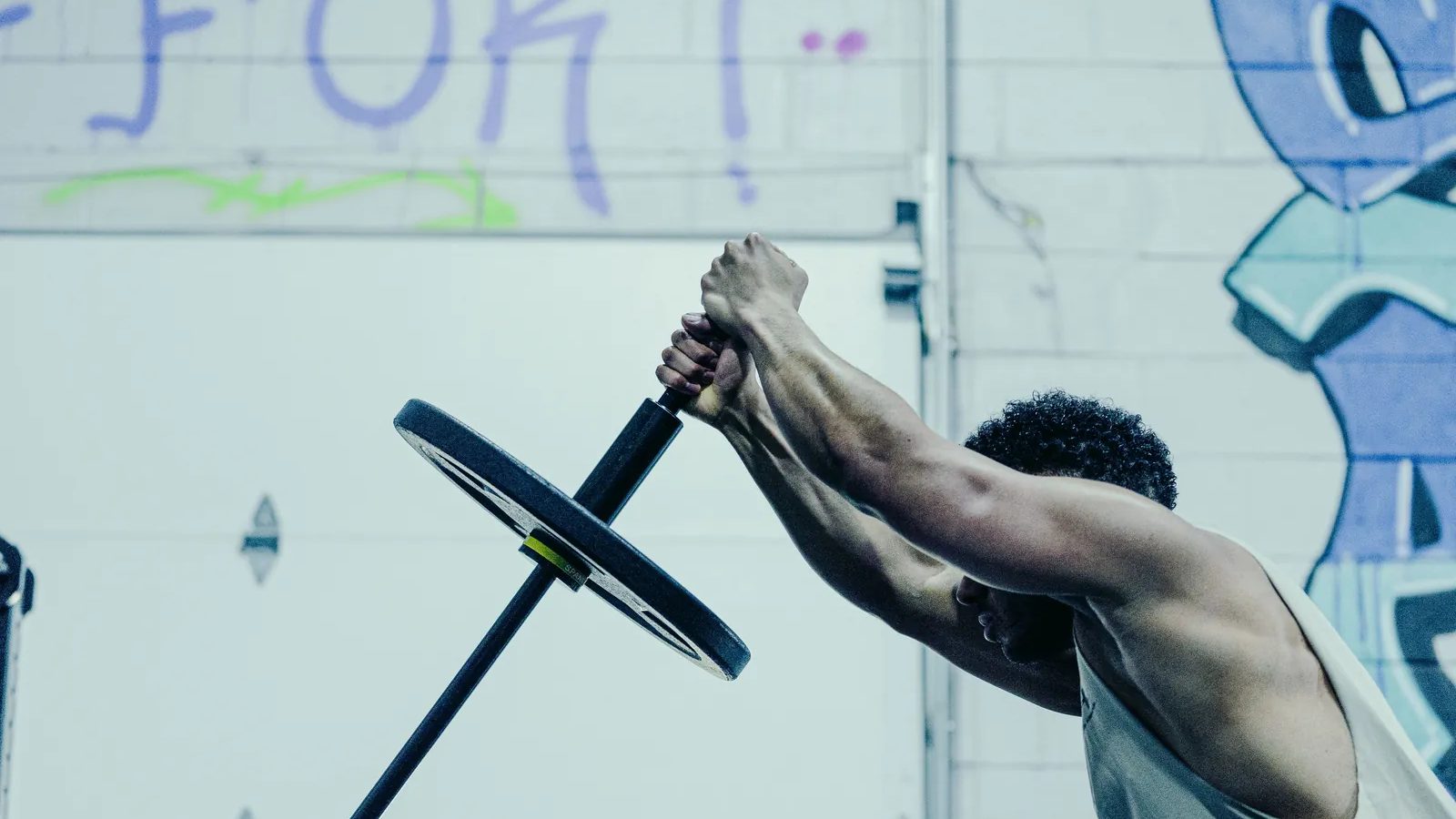
Why the stance decides the rep
A landmine bar presses on an arc, not a line. The sleeve end is fixed in the pivot, so the handle end swings through a quarter circle that is up and away from you at the same time. Your stance decides where in that arc your shoulder meets the bar and how much of your body can contribute.
Square and standing, both feet level, you have the longest path and every joint available. That is the version we load heaviest. That is useful when the point is to move load. It is also why a standing press quietly turns into a push press: the knees dip, the hips snap, and the bar goes up on momentum the shoulder never produced.
Split stance, one foot forward, cuts most of that. You can still brace hard, you still have a base, but the dip is gone because the geometry will not let you load both legs the same way.
Half kneeling, back knee down and front foot planted, removes the legs as a contributor. What is left is the trunk holding position while the arm presses. It is the strictest of the three and it is also the most honest, because there is nowhere for the load to hide.
The setup, in order
The order matters more than any single cue. Set the base, then the bar, then press, and do not let the bar decide where your body goes.
- Put the back knee under the hip
Half kneeling starts here, and this is the fault we see most. Let the knee drift behind the hip and the pelvis tips forward, the ribs flare and the press becomes a lean. Knee under hip, ribs tucked down, and the position holds itself.
- Plant the front foot flat
Shin roughly vertical, knee and toes pointing the same direction. A foot turned out gives you a wider, lazier base, and the torso follows it.
- Line the bar up with the pressing shoulder
The bar sits in front of that shoulder, never out to the side of it. The standard pairing is the back knee down on the same side as the pressing arm, which puts the hip, the shoulder and the bar in one line.
- Press along the arc, not past it
The elbow finishes in front of the body rather than flared wide, and the bar travels up and away on the path the pivot gives it. Stop where the shoulder stops.
The four faults
These four cover almost everything we correct on the floor.
Ribs flaring at the top. The press runs out of shoulder, the lower back takes over, and the finish is a lean rather than a lockout. It is the single most common one.
Hips rotating with the press. On a single arm press the load is trying to turn you. If the hips swing to meet the bar, the trunk stopped doing its job and the rep became easier than it looked.
Bouncing out of the bottom. The bar rests on the chest, the body dips, and the rep starts on momentum. Pause it for a count down there and the stance you picked is the stance you are actually using.
Over-reaching at the top. Chasing the last inch by letting the shoulder travel forward and the back round. The arc ends where it ends.
We fix them in that order. Ribs first, because the other three get easier once the trunk is set, and our coaching cue is the same every time: set the base, then the bar, then press.
What the bar you own changes
Our bars differ in length and weight, and both change the geometry before you touch any of it. A longer bar puts the handle end further from the pivot, which lengthens the arc and changes the angle your shoulder meets it at. A heavier bar means the empty bar is already a working weight for some lifters.
The five bars the store publishes are the Fresh Bar at 15.5 lb and 77.0 in, the Melo Bar at 25 lb and 78.4 in, the Velencia Bar at 34 lb and 87.0 in, the Spann Bar 2 Hybrid at 37 lb and 94.1 in, and the Spann Bar at 43 lb and 94.1 in. Grip is 25 mm on all of them except the Spann Bar, which is 28.5 mm. Every one is rated to 550 lb.
Two bars at the same length can still feel different in the hand because of that grip difference, and a 28.5 mm grip in a single arm press is a different ask than a 25 mm one. If you are choosing rather than pressing, what size landmine bar walks the sizes against height and use, and the movement itself is in the exercise library. The bars are on the store.
Common questions
- Should you press a landmine standing, split stance or half kneeling?
- All three, for different jobs. Standing square gives the longest arc and every joint available, which is useful for moving load and is also where a strict press quietly becomes a push press. A split stance keeps a base while removing most of the dip. Half kneeling takes the legs out entirely and leaves the trunk and the arm, which makes it the strictest of the three.
- Which knee goes down on a half kneeling landmine press?
- The standard pairing puts the back knee down on the same side as the pressing arm, so the hip, the shoulder and the bar line up and the trunk has something to resist. Keep the back knee under the hip rather than behind it, and the front shin roughly vertical with the knee and toes pointing the same way.
- Why does my lower back arch on a landmine press?
- Usually the ribs are flaring at the top of the rep. The press runs out of shoulder, the trunk gives up position, and the finish becomes a lean rather than a lockout. Tuck the ribs down in the setup and stop the rep where the shoulder stops, rather than chasing the last inch.
- Does the bar I use change the press?
- Yes, through length and weight. A longer bar puts the handle further from the pivot, which lengthens the arc and changes the angle at the shoulder, and a heavier bar means the empty bar is already a working weight for some lifters. Grip thickness matters too: the store's bars are 25 mm except the Spann Bar at 28.5 mm.
Your bar.
Five sizes from 15.5 lb. Fits a standard 2-inch landmine sleeve. 550 lb capacity. 1-year limited warranty, 30-day returns.
Order your barThe first and only patent-approved barbell designed for landmine sleeve attachment.