 Spann Fitness
How to · Rotational work · Landmine training · 6 min read · Updated October 2026
How To Do a Landmine Rotation
Stand side-on to the sleeve, hold the loaded end in both hands with your arms long in front of you, and turn from the feet and hips so the bar sweeps across your body in an arc. The arms do not swing the bar. They set the radius and hold it while the hips do the work. That is the movement, and it is one of the two things we have said a landmine does that a rack does badly in what a landmine barbell is.
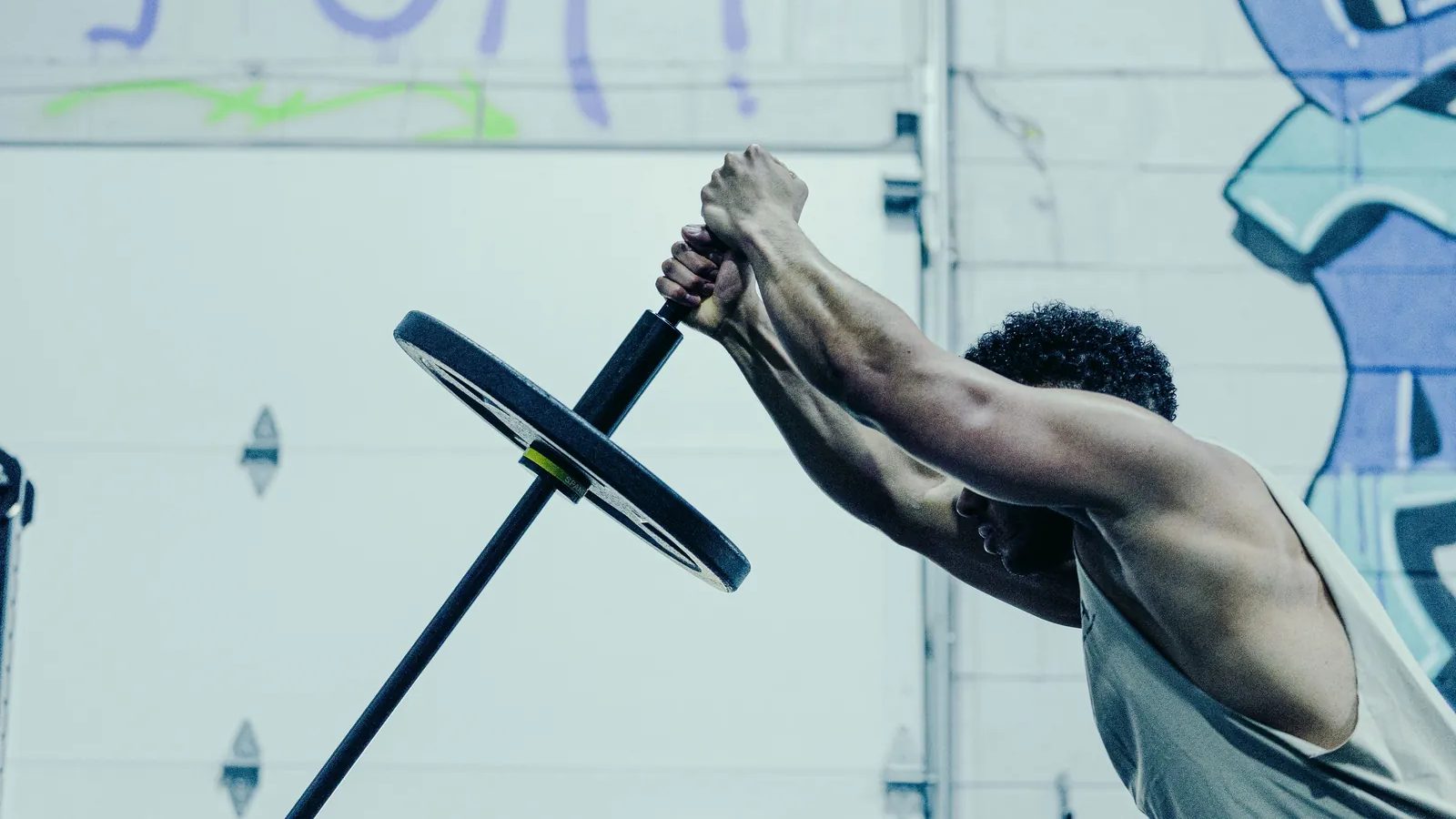
A rotation is not a rotational press
These get used as the same word and they are two different patterns. Worth separating before you load anything.
The rotational press finishes overhead. You start side-on with the loaded end at the shoulder nearest the sleeve, pivot the back foot, turn the hips, and the press comes off that turn so the bar travels across the body and up. Our cue for it is four words in order: feet, hips, ribs, arm. If the arm goes first, the hips are late.
The rotation we are describing here never gets to the shoulder. The arms stay long the whole time and the bar stays out in front of you, chest height, travelling in a flat arc from one side to the other. People call it a twist, or a 180 when the turn is big. Same pattern, different names.
How to do a landmine rotation
Light. The arc is long, the far end of it is less forgiving than it looks, and the first set should feel like nothing.
- Set the sleeve and load light
Bar in the sleeve, one plate or none to start. The loaded end is the end you will be holding, out at the far end from the pivot.
- Stand side-on, feet planted
Square your hips and set your feet about shoulder width, side-on to the sleeve, far enough back that the bar is not jammed into your chest at the near side of the arc.
- Take the end in both hands, arms long
Both hands on the loaded end at roughly chest height, elbows soft but not bent, arms reaching out in front of you.
- Turn from the feet
Pivot the trailing foot and let the hips turn, and let the bar follow that turn across your body. The arms hold their length. Nothing is thrown.
- Finish square and come back
Stop the arc under control rather than letting the bar run out to the end of it, then turn back the other way on the same path. Work both directions evenly.
Why the arms stay long
Because the length is the exercise. A long arm holds the loaded end further from the axis you are turning around, and that distance is what the turn has to work against. Bend the elbows and you shorten the lever, the bar comes in close to your body, and the turn gets easy in a way that is not interesting.
This is also where the bar itself changes the movement, which surprises people. The lineup runs from 77.0 in on the Fresh Bar to 78.4 on the Melo, 87.0 on the Velencia, and 94.1 on both the Spann Bar 2 Hybrid and the Spann Bar. One end is fixed in the sleeve, so the bar is the radius of the arc. The same turn of your hips sweeps the loaded end through a noticeably longer path on a 94.1 in bar than on a 77.0 in one, with the same plate on it. That is geometry, not a performance claim, and it is the reason a rotation that felt fine on a short bar can feel like a different exercise on the flagship.
Practical version: if you are moving from a shorter bar to a longer one, take weight off and re-learn the arc before you put it back on.
The hold is the other half of it
Once you have turned against the load, the opposite drill is worth the same attention. The anti-rotation hold is the same setup, side-on, loaded end in both hands at chest height, arms long, except you do not turn at all. The bar pulls you toward the sleeve and you refuse it, for time, then switch sides.
Feet planted, hips square, breathing normal. Nothing moves, which is the whole exercise. We put the two next to each other in a session often: turn against the load, then hold against it.
Core is the word everybody searches for here and we are not going to promise you anything about it. What we will say is that both drills are mechanically about resisting and controlling a sideways pull, and the landmine makes that pull easy to set up and easy to scale.
Three faults we see
The arms going short. Elbows creep in, the bar tucks against the chest, and the rotation turns into a shuffle. Reset and reach.
Throwing the arc. If you let the bar run and then catch it at the end, the turn stopped being yours halfway through. Decelerate it yourself at both ends.
Feet that never move. Planting flat and twisting at the waist alone is where people get grumpy about rotational work. The trailing foot pivots. The turn starts at the floor.
Common questions
- Is a landmine rotation the same as a landmine 180?
- Same pattern. The 180 is just a name for taking the arc from one side all the way across to the other rather than working a shorter range. Start short and open the arc up as you get control of it.
- Which bar suits rotational work?
- Any of them will do it, and bar length sets how far the loaded end travels for a given turn: 77.0 in on the Fresh, 78.4 on the Melo, 87.0 on the Velencia, and 94.1 on the Spann Bar 2 Hybrid and the Spann Bar. In the store's own words the Fresh suits youth athletes, rehab, beginners and high-rep work, the Velencia suits most athletes, general training and home gyms, and the Spann Bar is the flagship for advanced lifters, heavy landmine work and commercial gyms. All five are rated to 550 lb.
Your bar.
Five sizes from 15.5 lb. Fits a standard 2-inch landmine sleeve. 550 lb capacity. 1-year limited warranty, 30-day returns.
Order your barThe first and only patent-approved barbell designed for landmine sleeve attachment.