 Spann Fitness
How to · Deadlift · Technique · 6 min read · Updated November 2026
How To Deadlift With a Landmine
A landmine deadlift is a hinge, the same hinge you already own. The difference is geometry. With one end of the bar seated in the sleeve, the loaded end swings through an arc instead of travelling straight up, and that arc means the lift finishes earlier and closer to you than a straight bar does. Set up for the arc and the movement is simple. Set up as though the bar were going straight up and you will feel it fighting you at the top. We tell every lifter the same thing: start light, get the path right, then load it.
Why the arc changes the setup
On a straight barbell the path is vertical and your feet decide everything. On a landmine the pinned end fixes the radius, so the bar's path is decided before you touch it. Our job, and then yours, is to stand where that path wants to go.
Stand too far from the sleeve and the bar runs out of arc before your hips finish, so the last few inches feel like a tug rather than a lockout. Stand too close and the handle climbs into your body and you end up leaning back to make room. Somewhere between the two the arc and your hips finish at the same moment, and that is the position worth finding with an empty bar before you load anything.
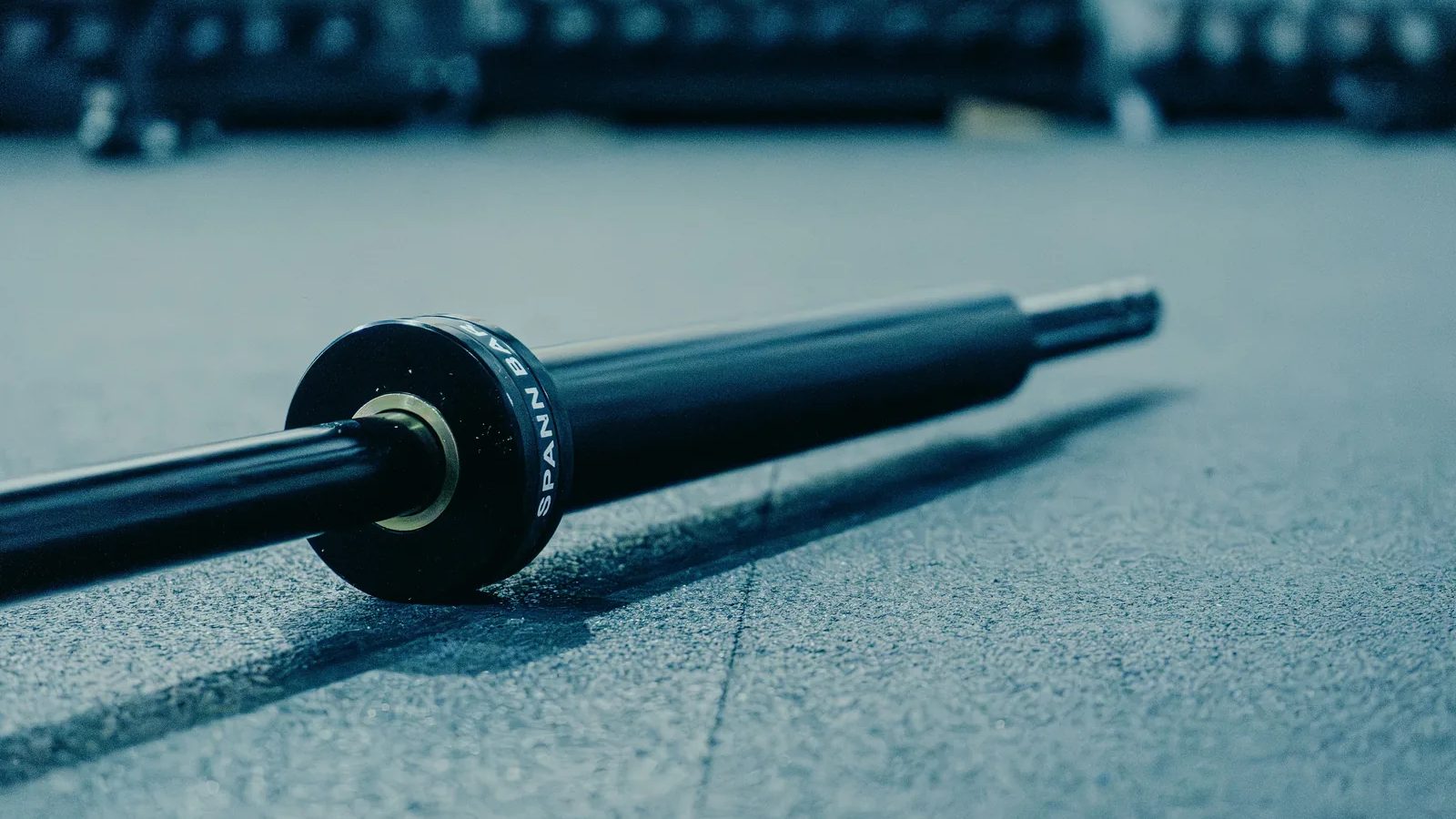
Load sits on the loadable sleeve at the free end, which is 7.5 inches on every bar in the lineup and takes standard Olympic plates. Rated capacity is 550 lb across every size, so the limit here is geometry and floor space long before it is the bar.
The setup, step by step
Two useful checks. The bar should feel like it is being lifted, not swung, and the plate should come to rest in the same spot every rep. If it drifts, the distance is wrong rather than the technique.
- Pin the bar
Seat one end in a standard 2 inch landmine sleeve, rack-mounted, corner or floor unit. Every bar in the lineup fits a standard 2 inch sleeve with no adapter.
- Load the free end
Standard Olympic plates on the 7.5 inch loadable sleeve. Start with a plate you could do 10 clean reps with, because the first job is the path, not the number.
- Find your distance
Face the sleeve, feet about hip width, and take the handle end with the bar at mid shin. Shuffle in or out until your hips and the bar would finish together. Check this empty first.
- Set the back
Chest up, ribs down, a long flat line from the back of your head to your hips. Shoulders stay over or slightly ahead of the handle, exactly as they would on a straight bar.
- Hinge, do not squat
Push the hips back to lower, let the knees bend as much as the hinge asks for and no more. Shins stay close to vertical.
- Drive and finish short
Push the floor away and stand. Finish when the hips are through and the bar is at the top of its arc, which is sooner than a straight bar. Do not pull past it.
- Lower on the same line
Send the hips back first and follow the arc down. The bar should land where it started, not out in front of you.
Square, staggered or single leg
Square stance is the default and the one to learn first. Both feet level, hips square to the sleeve, and the whole movement is a straight hinge through the arc.
Staggered stance puts one foot back on the toe, taking perhaps a quarter of the load. It lets you bias one side without balancing on one leg, and it is the sensible bridge between square and single leg.
Single leg is the one most people jump to and the one that asks most of you. The free leg travels back as a counterweight, the standing hip takes the whole hinge, and the pinned bar gives you a fixed path to work against while you learn it. Range is usually shorter than people expect, and the honest version stops when the back rounds rather than when the plate touches down.
Pick by what you are trying to train, not by difficulty. A square stance moves the most load, and a single leg version moves far less of it through a narrower, harder to hold position. We would rather see a square stance loaded properly than a single leg version that never progresses.
How much plate actually fits
This is where the floor gets crowded, and it is the question we get most. The sleeve holds plates, the bar sits low at the start, and on a short bar a stack of 45s can reach the floor before the lift does. A 45 lb bumper is wider than a steel plate of the same weight, so the same number on the bar takes up very different room.
Bar length is what buys you clearance. Across the lineup that runs from 77.0 inches on the Fresh Bar up to 94.1 inches on the Hybrid and the flagship Spann Bar, and a longer bar sits at a shallower angle, which keeps the loaded end higher off the floor at the start. If the plates are grounding out before you are, the bar is short for the load rather than the load being wrong. Which length suits which lifter is covered in what size landmine bar.
The grip matters here too. Four of the five bars run a 25 mm shaft and the flagship Spann Bar runs 28.5 mm, which is the one that holds up best when a heavy deadlift turns into a grip problem.
Where it fits in a session
Treat it as a hinge, so it goes where a hinge goes: early, after warming up, before the work that needs less of your back. Pair it with a pull if you want, and the landmine row is the obvious partner because our setup is already built.
The bar is the Spann Bar, and every size in the lineup fits a standard 2 inch sleeve. The first and only patent-approved barbell designed for landmine sleeve attachment.
Common questions
- Where should I stand relative to the sleeve?
- Close enough that your hips and the top of the arc finish together. Too far out and the lockout turns into a tug; too close and the handle crowds you and you lean back to make room. Find it with an empty bar before loading.
- How much weight can the bar hold?
- 550 lb on every size in the lineup, on a 7.5 inch loadable sleeve that takes standard Olympic plates. In practice the limit on a deadlift is usually plate clearance at the floor rather than the rating.
Your bar.
Five sizes from 15.5 lb. Fits a standard 2-inch landmine sleeve. 550 lb capacity. 1-year limited warranty, 30-day returns.
Order your barThe first and only patent-approved barbell designed for landmine sleeve attachment.